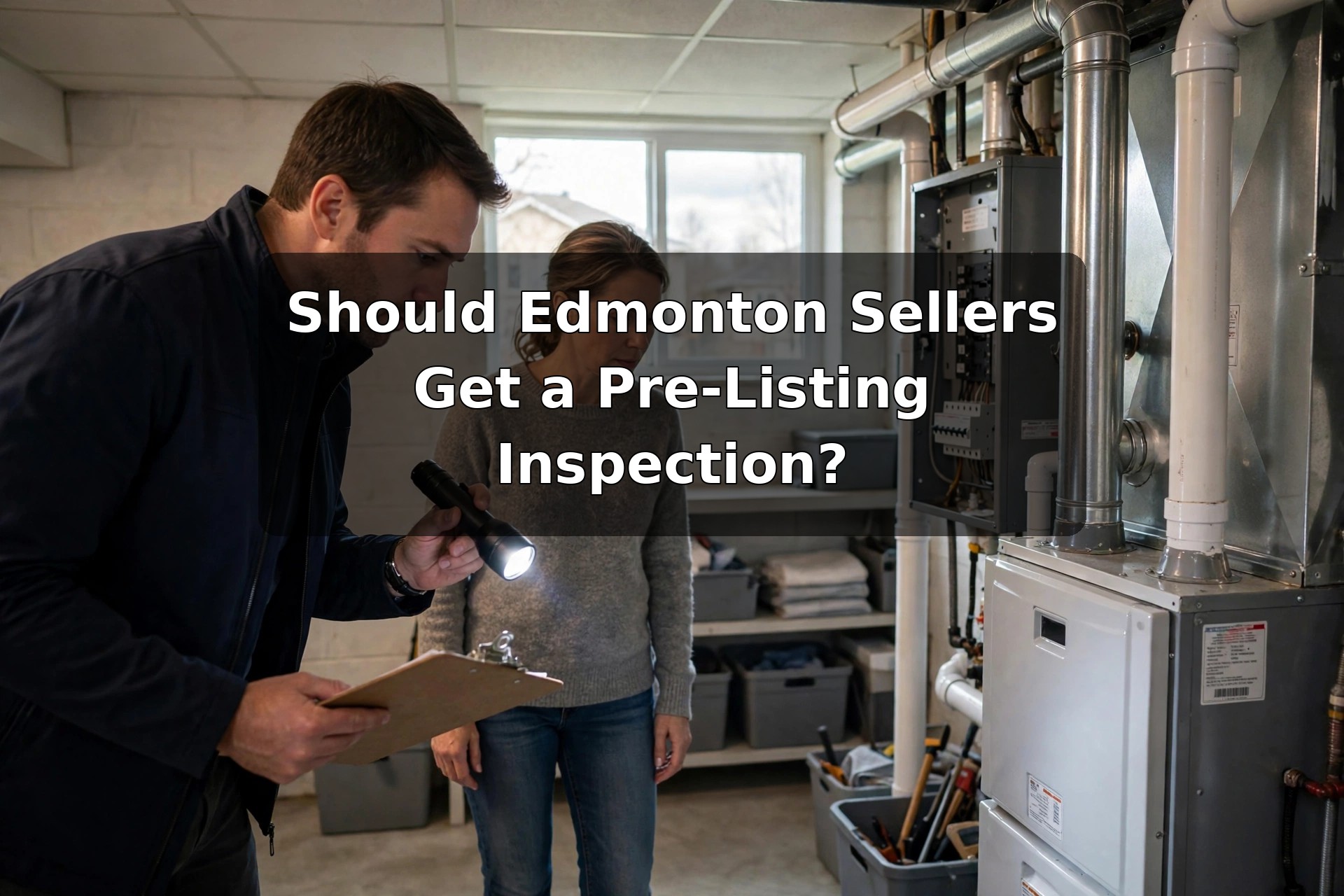
Should Edmonton Sellers Get a Pre-Listing Inspection?
Your buyer’s inspector will find your home’s problems eventually. The only question is whether you learn about them first — on your schedule, at contractor prices — or second, mid-deal, at negotiation prices. Here is the honest case for and against a pre-listing inspection, and what to do with the report.
By YEG.Homes · Updated November 2, 2026On this page
- The short answer: worth it for most sellers — with one condition
- What a pre-listing inspection is (and is not)
- The case for: five ways it makes you money
- The honest case against
- After the report: fix, disclose, or price it in
- Timing: where it fits in your sale
- Key takeaways
- Frequently asked questions
The short answer: worth it for most sellers — with one condition
A pre-listing inspection is one of the few pre-sale expenses that can pay for itself twice: once by removing the surprises that kill deals mid-condition period, and again by letting you fix small problems for hundreds of dollars instead of conceding thousands at the negotiation table. The condition: you have to be ready to act on what it finds — fix it, disclose it, or price it in. An inspection you plan to bury helps no one, least of all you.
Here is the situation it prevents. Your home sells conditionally. The buyer’s inspector finds moisture in the basement wall, a furnace at end of life, and a panel that needs upgrading. None of it is news a long-time owner should be shocked by — but now it is the buyer pricing your repairs, under deadline, with an exit clause in their hand. That is the most expensive way to learn your own home’s condition. A pre-listing inspection moves that same information to before the listing, when you control the timing, the contractors, and the story.
What a pre-listing inspection is (and is not)
A pre-listing inspection is a standard home inspection — structure, roof, exterior, heating, plumbing, electrical, insulation, and interior — that the seller commissions before the home goes on the market, instead of the buyer commissioning one after an accepted offer. In Alberta, home inspectors must be licensed, so verify the licence before you book.
What it is not: a guarantee, a warranty, or a substitute for the buyer’s own inspection. Inspectors report on what they can see and access on the day. Buyers may still hire their own inspector, and their report may flag different things. Your report’s value is preparation and transparency — not immunity.
- Cost: commonly $400 to $700 in the Edmonton area depending on size, age, and property type; add-ons like sewer scopes cost extra.
- Timing: four to six weeks before your list date leaves room to act on the findings.
- Deliverable: a written report you can fix from, disclose with, and leave out for buyers to read at showings.
The case for: five ways it makes you money
1. You price repairs at contractor rates, not negotiation rates
A $600 furnace repair quoted calmly in advance becomes a $2,500 price concession when a buyer’s inspector flags “furnace at end of life” two days before conditions expire. Buyers price uncertainty, not invoices. Every defect you retire with a receipt removes a discount you would otherwise give.
2. Your deal stops dying in the condition period
Inspection surprises are one of the most common reasons conditional sales collapse — and a collapsed sale costs you twice: the weeks off the market, and the stigma of the home coming back. Sellers who already know their home’s report rarely meet a finding that can blow up the deal.
3. Clean reports make stronger offers
A home with a recent inspection report and receipts for completed work is simply easier to buy. Buyers write with more confidence, conditions get shorter, and some buyers will accept your inspector’s findings in place of their own. Confidence is worth money in an offer.
4. Your list price gets more accurate
Pricing is the highest-leverage decision you will make, and it depends on condition as much as on square footage. Knowing the roof has five years left — or two — changes where your home honestly sits against recently sold homes in Edmonton and area. It is also how you avoid the pattern in the pricing mistakes that cost Edmonton sellers thousands: guessing at a number the condition of the home cannot support.
5. Disclosure becomes a strength instead of a risk
In Alberta, sellers must disclose known material latent defects — hidden defects that make a home dangerous or unfit for habitation. A pre-listing inspection means you disclose from a position of knowledge, with quotes and receipts attached, instead of hoping a problem stays hidden. Handled openly, a disclosed-and-priced issue scares off almost no one; discovered mid-deal, the same issue scares off almost everyone.
The honest case against
The inspection is not free, and it is not always the right spend:
- It creates knowledge you must act on. Once a material latent defect is in a report you paid for, “I didn’t know” is gone. If you are not prepared to fix or disclose, do not order the report.
- Buyers may inspect anyway. Budget for the possibility that your report informs the sale without shortening it.
- Newer homes gain less. A five-year-old home with warranties and service records may get more from professional photos and staging than from an inspection.
- Findings can grow. An inspector can only report what is visible; opening a wall can change the scope of any repair. Get contractor quotes before assuming the worst — or the best.
After the report: fix, disclose, or price it in
Every finding lands in one of three buckets. Work through the report with your agent and sort it before the listing launches:
| Bucket | What goes in it | Why |
|---|---|---|
| Fix it | Safety items, active leaks, furnace and electrical issues, and cheap fixes with outsized visual impact | Repairs cost less before an offer than concessions do after one — and receipts become part of the listing’s story |
| Disclose + quote | Big-ticket items you will not fix: roof near end of life, aging windows, foundation history | A known issue with a real contractor quote attached is a bounded problem; an unknown one is priced as a worst case |
| Price it in | Overall condition that trails the comparable sales you are pricing against | Condition is already in the math — reflect it in the list price rather than negotiating it later under pressure |
Keep the paperwork: the report, the quotes, and the receipts for everything you fixed. That folder is part of what the buyer is paying for. Fold the repair spend into your overall selling budget alongside the other costs — our full breakdown of what it costs to sell a house in Edmonton shows where an inspection sits relative to commission, legal, and moving costs.
Timing: where it fits in your sale
Book the inspection four to six weeks before you want to list. That gives you two weeks to collect quotes, two weeks for the worthwhile repairs, and a clean runway into photos and launch. It also keeps the report fresh enough to be credible to buyers. And it protects your launch window — how long a sale takes in Edmonton depends heavily on a strong first two weeks, and nothing dulls a launch like a listing delayed by repairs you could have finished in advance.
Key takeaways
For most Edmonton sellers, a pre-listing inspection is money well spent: a few hundred dollars to learn your home’s condition on your own schedule, fix the small things at contractor prices, disclose the big things with quotes attached, and price from facts. The deal it protects you from is the conditional sale that collapses over a surprise. The one condition is honesty — in Alberta, a known material latent defect must be disclosed, so only order the report if you are prepared to fix, disclose, or price in what it finds. Book it four to six weeks before listing, use a licensed Alberta inspector, and keep every receipt.
Frequently asked questions
What does a pre-listing inspection cost in Edmonton?
Expect a few hundred dollars — home inspections in the Edmonton area commonly run in the $400 to $700 range depending on the size, age, and type of home, with extras like sewer-line camera work or radon testing priced separately. Get two or three quotes and confirm the inspector is licensed in Alberta.
If the inspection finds a problem, do I have to disclose it?
Yes. In Alberta, a seller who knows about a material latent defect — a hidden problem that makes the home dangerous or unfit to live in — must disclose it to buyers in writing. A pre-listing inspection creates that knowledge, so the honest options are to fix the problem, disclose it and price accordingly, or disclose it with a contractor's quote attached. Hiding a known defect is how sales collapse and legal disputes start.
Will buyers still do their own inspection if I provide mine?
Often, yes — and you should expect it. Many buyers (and their lenders) want their own inspector's eyes on the home. Your report's job is not to replace theirs; it is to remove surprises, let you fix the small things in advance, and give buyers confidence to write a stronger, cleaner offer.
When should I book a pre-listing inspection?
Four to six weeks before your target list date is a good window. That leaves time to get contractor quotes, complete worthwhile repairs, and update the report or attach receipts before the listing goes live. Booking the week before photos leaves you choosing between delaying the launch and listing with known problems unaddressed.
Which homes benefit most from a pre-listing inspection?
Older homes, homes with past renovations, rural properties with wells and septic systems, and any home where the seller has simply been there a long time and lost track of its condition. A newer home with transferable warranties and a clean maintenance record gains less — the money may be better spent on staging and professional photos.
Selling soon? Start with what your home is worth.
Get a free, no-obligation home evaluation based on actual sold comparables in your Edmonton neighbourhood — and an honest read on which pre-listing repairs are worth doing, and which are not.
Get My Free Home EvaluationThis article is for general information only and does not constitute legal or professional inspection advice. Alberta disclosure obligations depend on your specific circumstances — confirm yours with your real estate professional or lawyer before listing. © 2026 yeg.homes