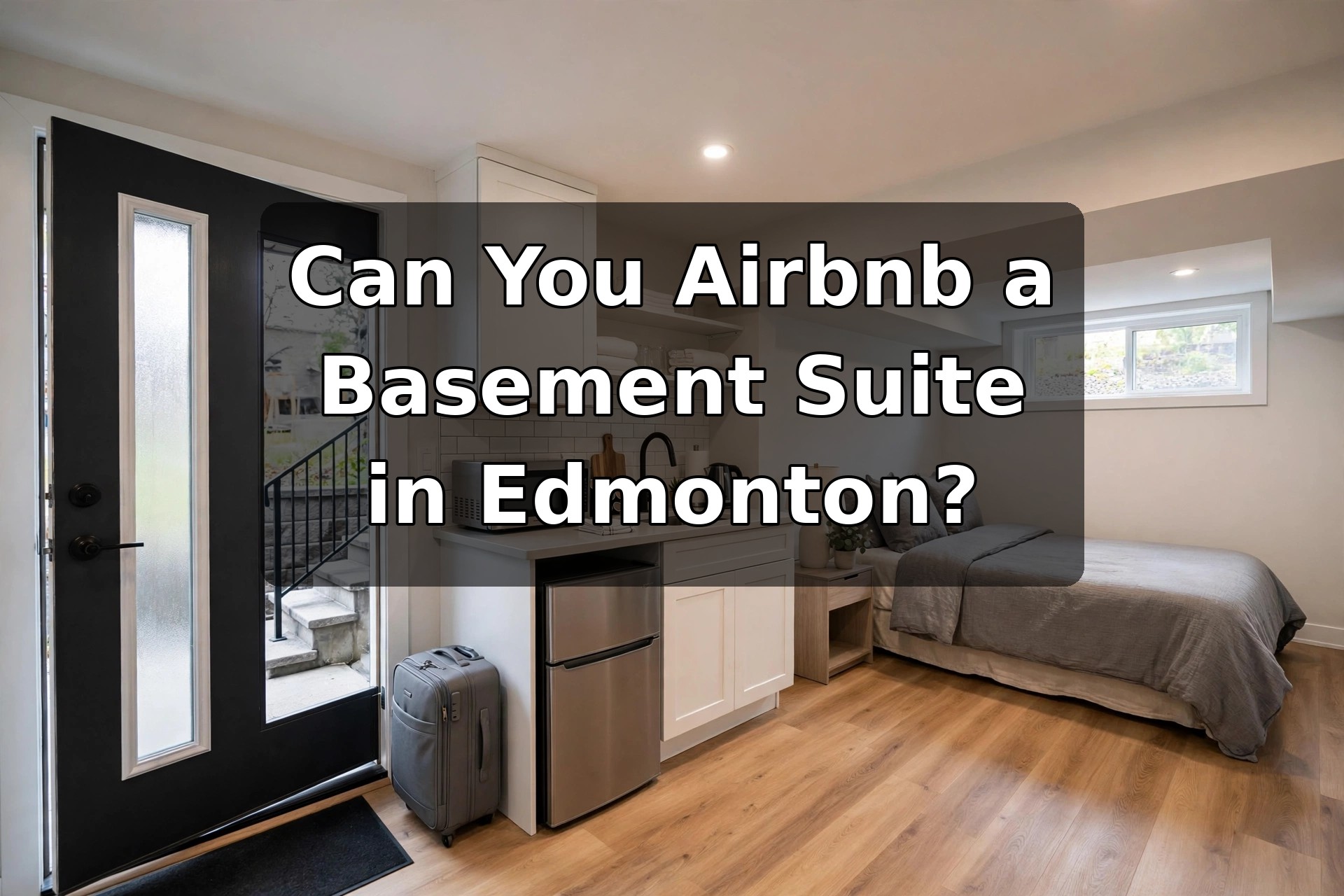
Can You Airbnb a Basement Suite in Edmonton? The Rules That Decide
Yes — Edmonton licenses short-term rentals in basement suites. But two separate approvals decide whether yours is lawful: the suite itself must be legal and permitted, and the rental needs the City’s short-term licence. Here is how both work, plus the condo, mortgage and insurance checks that can stop you independently.
By YEG.Homes · Updated November 16, 2026On this page
- The short answer: yes, if the suite is legal and the rental is licensed
- First check: is the suite itself legal?
- The licence: what the City requires
- The hosted limits, if you live in the home
- The permissions the City cannot give you
- Short-term guests vs. a long-term tenant: the honest comparison
- Running it without becoming a neighbourhood problem
- Key takeaways
- Frequently asked questions
The short answer: yes, if the suite is legal and the rental is licensed
Edmonton allows short-term rentals, including in a basement suite. The City defines a short-term rental as residential accommodation rented for 30 consecutive days or less, and it licenses two shapes of it: renting an entire dwelling, and renting rooms or spaces in a home where the host also lives. A basement suite fits the first shape when guests get the whole self-contained unit. Two separate approvals decide whether your setup is lawful: the suite itself must be a legal, permitted secondary suite, and the rental business must hold the City’s short-term rental licence.
First check: is the suite itself legal?
A short-term rental licence does not turn a finished basement into a legal suite. Building or converting a secondary suite in Edmonton requires a development permit and a building permit, and the finished unit has to meet the code requirements for a self-contained dwelling — its own entrance, kitchen, bathroom, sleeping and living areas, fire separations, ceiling height and egress windows. Any construction inside the home to accommodate guests, such as adding a bedroom or finishing a basement, needs a building permit as well.
If your basement was finished without permits, deal with that first. Guests, platforms and insurers all treat a permitted suite differently from an unpermitted one, and a complaint to 311 can end the business at the worst possible time. If you are weighing a basement suite against building in the backyard instead, our garden suite guide sets out how that separate option is regulated.
The licence: what the City requires
Every dwelling used for short-term rental in Edmonton needs a valid Residential Rental Accommodation (Short-Term) business licence — one per dwelling, whether or not you live in the home. The City’s requirements, in plain terms:
- Apply as a home-based business. The application is made online by selecting the Home-Based Business licence type, with the applicable fee.
- File an Operational Plan. You must complete the City’s Operational Plan for guest management for short-term rentals as part of the application.
- Show the licence number in your advertising. A valid licence number must appear on any advertisement for the dwelling — including your platform listing.
- Give guests the City’s guest guide. Hosts must provide guests with a copy of the City’s Short-Term Residential Rental Accommodation: Information for Guests guide, and post their own telephone number in the rental at all times.
- Expect a health-services notification. Alberta Health Services is notified of licence applications and may have additional requirements.
The hosted limits, if you live in the home
Sharing your own home is licensed too, and it carries a specific cap: if you live in the residence, you may rent out up to 2 sleeping units, each occupied by a maximum of 2 persons. Renting more than 2 sleeping units as a live-in host requires a Major Home-Based Business Development Permit before the licence is issued. Separately, renting out 4 or more sleeping units in a building requires both a development permit and a building permit. A single self-contained basement suite rented as one unit sits comfortably inside these limits for most owners — a house carved into several separately rented rooms is a different business, and it is regulated like one.
The permissions the City cannot give you
The City licence is necessary, but it is not the only permission that can apply:
- Condo and homeowners’ association bylaws. Some condominium and HOA bylaws prohibit short-term rentals outright. The City states plainly that checking those bylaws before applying is the host’s responsibility.
- Your mortgage and insurance. Tell your lender and your insurer the basement will hold paying short-stay guests. A policy written for an owner-occupied home, or for a long-term tenant, may not respond the same way to nightly guests — find out before the first booking, not after the first claim.
- Taxes. Short-term rental income is taxable income, and provincial tourism levy and GST obligations can apply depending on how you operate and what you earn. Get an accountant’s read for your situation before you set your nightly rate.
Short-term guests vs. a long-term tenant: the honest comparison
The appeal of short-term rental is flexibility and a higher rate per night. The costs are real, and they are mostly your time and the gaps between bookings:
| Line | Short-term guests | Long-term tenant |
|---|---|---|
| Income pattern | Higher per night, uneven across the year; empty weeks earn nothing | Steady monthly rent; Edmonton’s average rent across all home types was $1,605 in May 2026 |
| Your workload | Cleaning, laundry, restocking, messaging and check-ins after every stay | Leasing once, then ordinary landlord duties |
| Extra costs | Furnishing the suite, supplies, platform fees, higher utility and wear costs | Tenant screening once; fewer turnovers to repair |
| Flexibility | You can block dates for family or your own use | The tenant’s home is their home for the lease term |
Neither wins on paper for every house. Location drives short-term demand — a suite near hospitals, downtown or major event venues books differently from one in a quiet suburb. If you already own a suited home and are deciding between keeping it in any rental form and selling it, our sell-or-rent breakdown runs that larger decision in full, and recently sold homes in Edmonton and area shows what suited properties actually trade for if you lean toward selling.
Running it without becoming a neighbourhood problem
Most complaints about short-term rentals are not about the licence — they are about noise, parking and garbage, and the City’s host rules speak to all three. Residential noise is not permitted between 10pm and 7am. Guests’ vehicles must follow ordinary street rules, including staying at least 1.5 metres from driveways and moving at least every 72 hours. Waste carts and bags are your responsibility: out by 7am on collection day, and not left out on other days. Clear house rules, given before check-in, prevent most of it. Hosts who treat neighbours well rarely meet bylaw enforcement; hosts who do not, do.
Thinking of buying a home with a suite for this purpose? Start from what is actually listed — homes with legal secondary suites in North Edmonton, suited homes in Sherwood Park and suited homes in St. Albert — and verify the suite’s permits before you underwrite a dollar of guest income.
Key takeaways
Yes, you can rent a basement suite to short-term guests in Edmonton — accommodation of 30 days or less — provided two things are in place: the suite is a legal, permitted secondary suite, and you hold a Residential Rental Accommodation (Short-Term) business licence for that dwelling, with an Operational Plan filed and your licence number in your ads. Live-in hosts are capped at 2 sleeping units of 2 persons each without an extra development permit. Condo and HOA bylaws, your mortgage and your insurance can each say no independently of the City. Run the income comparison honestly against a long-term tenant before you furnish anything.
Frequently asked questions
Can you Airbnb a basement suite in Edmonton?
Yes, provided the suite is a legal, permitted secondary suite and you hold the City of Edmonton's Residential Rental Accommodation (Short-Term) business licence for that dwelling. Edmonton defines a short-term rental as accommodation rented for 30 consecutive days or less, and licenses both entire-dwelling rentals and rentals of rooms in a home where the host lives.
Do I need a licence if I only rent my suite out occasionally?
Yes. The City requires a valid short-term rental business licence for each dwelling used for short-term home rental, regardless of whether the host lives at the premises, and the licence number must appear in any advertisement for the dwelling. An Operational Plan for guest management is part of the application.
Can I short-term rent a basement that was finished without permits?
The rental licence does not legalize the space itself. Developing a secondary suite requires a development permit and a building permit, and construction inside the home to accommodate guests needs a building permit. Sort out the suite's permits first — an unpermitted unit is exposed to complaints and enforcement, and to problems with insurers.
Do I have to live in the house to rent out the basement suite?
No. Edmonton licenses rental of an entire dwelling as its own short-term rental type, separate from renting rooms in a home you live in. If you do live in the home, a cap applies: you may rent up to 2 sleeping units, each occupied by a maximum of 2 persons, and renting more than 2 requires a Major Home-Based Business Development Permit first.
Is a basement suite better on Airbnb or with a long-term tenant?
It depends on the property and on your time. Short-term guests can pay more per night but leave empty weeks, and every stay brings cleaning, laundry and messaging work. A long-term tenant pays steady monthly rent — Edmonton's average rent across all home types was $1,605 in May 2026 — with far less weekly effort. Compare a full year of realistic bookings, not a busy month, against the steady rent.
Own a home with a suite — or shopping for one?
Get a straight read on what a legal suite does for a home's value and income, based on what suited homes in the Edmonton area actually sell for.
See Recently Sold HomesThis article is for general information only and does not constitute legal, tax, or investment advice. Short-term rental rules and licence requirements change — always verify the current requirements with the City of Edmonton before listing a property. © 2026 yeg.homes


Comments:
Post Your Comment: