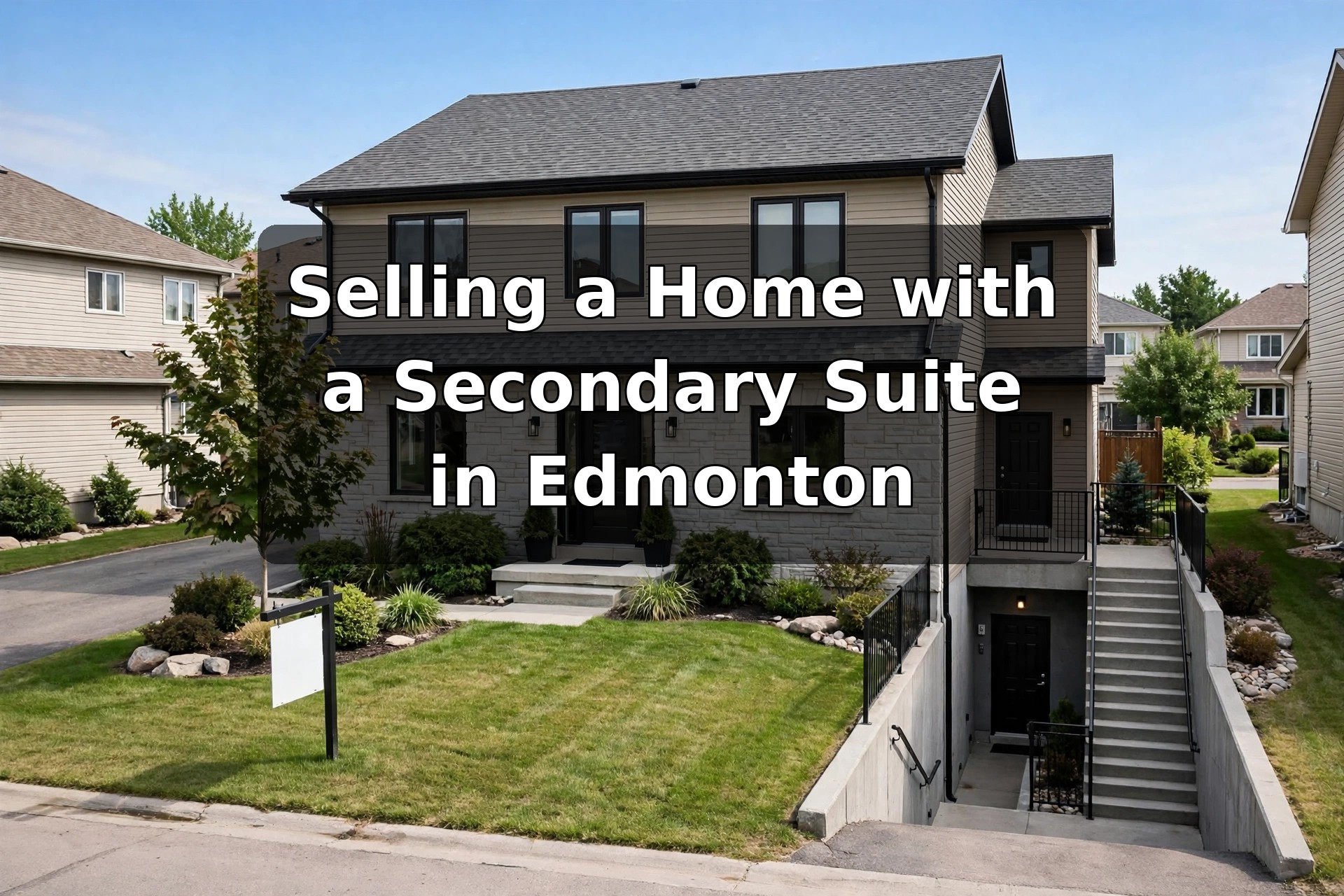
Selling a Home with a Secondary Suite in Edmonton: What Sellers Need to Know
Your suite is the reason three different kinds of buyers will look at your home — and the reason a deal can fall apart if its paperwork is thin. Here is how to prove the suite is legal, price what it actually adds, and handle a tenant in the suite under Alberta’s rules.
By YEG.Homes · Updated November 18, 2026On this page
- The short answer: a legal suite widens your buyer pool — an undocumented one narrows it
- Legal, illegal, or just a finished basement? Say which, early
- Assemble the paperwork package before you list
- Tenanted or vacant? The Alberta rules decide your timeline
- Pricing a suited home: suited comparables or nothing
- Presentation: sell both homes in the house
- Key takeaways
- Frequently asked questions
The short answer: a legal suite widens your buyer pool — an undocumented one narrows it
A home with a secondary suite can sell to three buyers at once: the owner-occupier who wants a mortgage helper, the multi-generational family, and the investor. That wider pool is worth money — but only when the suite is legal and you can prove it. Buyers pay a premium for documented rental income. They discount, hard, for a basement that is called a suite but cannot be shown to be one.
For context, Edmonton’s average rent across all home types was $1,605 in May 2026, and detached homes across the region averaged $575,575 in the August 2026 REALTORS® Association of Edmonton figures. A suited home is priced against other suited homes, not against that detached average — which is why the preparation below matters more than the listing description.
Legal, illegal, or just a finished basement? Say which, early
In Alberta, a unit only earns the word “suite” when it has the municipal approvals behind it — zoning, building code and safety requirements met, and a permit you can produce. Industry guidance in Alberta is blunt about the distinction: if there is no permit, the unit should not be marketed as a suite, and a non-permitted unit should be disclosed for what it is, in the listing itself, from the start.
That is not just wording. It decides your buyer pool and your risk:
- Legal suite, permits in hand: market the income, show the permit, price against suited comparables.
- Finished basement, no permits: describe the space honestly — separate entrance, second kitchen, the features themselves — and disclose the status upfront. Some buyers value the layout for family use; none should be allowed to believe they are buying legal rental income.
- Not sure: find out before you list. Your city’s permit records answer it, and discovering the answer mid-deal, on the buyer’s inspection, is the most expensive way to learn it.
Assemble the paperwork package before you list
Serious suite buyers — especially investors — ask for documents, not adjectives. Have these ready before the first showing:
- The suite’s permits and approvals, so legality is a fact, not a claim.
- The lease, if the suite is tenanted: rent, term, deposit, what is included, and any renewal terms.
- Rent history: what the suite has actually collected, and any vacancy stretches. Honest records support your price; optimistic ones unravel in conditions.
- How utilities are split between the house and the suite, and what that has cost.
- Your Real Property Report and compliance, as with any Alberta sale, plus any city licensing that applies to how the suite has been rented.
Tenanted or vacant? The Alberta rules decide your timeline
If the suite is rented, the sale runs on the Residential Tenancies Act’s clock, not yours. A fixed-term lease survives the sale — the buyer steps in as landlord and honours it to its end date, and you cannot end it early just to sell. A month-to-month tenancy can only be ended in connection with a sale after the deal is firm, on the buyer’s written request, with at least three full tenancy months’ notice — counting from the next rent due date, so the real timeline is longer than most sellers expect. Showings need 24 hours’ written notice to the tenant.
That produces a genuine choice. Sell with the tenant in place and you aim at investors and patient buyers, who get income from day one. Aim at vacant possession and your pool widens to every buyer who wants the suite for family — but your possession date has to survive the notice math. Our full guide to selling a rental property with tenants in Edmonton works through the notice sequence step by step. Decide which buyer you are selling to before you price, because the two buyers value the same suite differently.
Pricing a suited home: suited comparables or nothing
The most common pricing error with a suited home is adding a round number for the suite on top of a house price. Buyers and their appraisers do it the other way: they look for homes with comparable suites that actually sold, and they sanity-check the result against the rent the suite can collect. Ground your price the same way — in recently sold homes in Edmonton and area, filtered to suited properties where you can, using the method in our seller’s CMA guide. Then run your net properly: commission under the common Alberta structure, legal fees and the rest are itemised in our cost-to-sell breakdown. A legal suite supports a premium inside that math. It does not replace it.
Presentation: sell both homes in the house
- Photograph the suite properly — its entrance, kitchen, bathroom and living space — not as an afterthought to the main floor.
- Show the separate entrance working: clear, lit and obviously independent. It is the feature that turns a basement into a suite in a buyer’s mind.
- Keep the tenant relationship warm. A cooperative tenant who keeps the suite tidy and allows showings on proper notice is worth real money in a tenanted sale; a resentful one costs you showings.
- If you rent the suite short-term instead, different rules apply — the licence and limits are covered in our guide to renting a basement suite to short-term guests.
Shopping the other side of this market? The current supply sits on the suite pages for North Edmonton, Sherwood Park and St. Albert — and what those homes sell for is exactly the evidence your own price will be judged against.
Key takeaways
A legal, documented suite widens your buyer pool to owner-occupiers, multi-generational families and investors at once — and supports a premium priced from suited comparable sales. An unpermitted basement must be disclosed for what it is and marketed on its features, never as a suite. Assemble the permits, lease, rent history and utility split before you list. If the suite is tenanted, the RTA sets the timeline: fixed terms survive the sale, and ending a month-to-month tenancy takes three full tenancy months’ notice after the deal is firm. Choose your buyer — investor or vacant-possession — before you choose your price.
Frequently asked questions
Does a legal secondary suite add value when I sell?
Usually, yes — a legal suite widens the buyer pool to investors and multi-generational families as well as owner-occupiers, and documented rent supports the price. The premium is set by what comparable suited homes actually sold for, not by adding a fixed amount for the suite. An unpermitted basement does not earn the same treatment and must be disclosed as non-permitted.
Can I sell my home while a tenant is living in the suite?
Yes. The buyer steps in as landlord and the tenancy continues. A fixed-term lease must be honoured to its end date. A month-to-month tenancy can be ended in connection with a sale only after the deal is firm and the buyer requests it in writing, with at least three full tenancy months' notice counted from the next rent due date.
What if my basement suite doesn't have permits?
Then it should not be marketed as a suite. Describe the space honestly — separate entrance, second kitchen, finished rooms — and disclose its status upfront in the listing. Some buyers value the layout for family use, but selling it as legal rental income exposes you to price renegotiation or a failed deal when the buyer's checks find no permit.
Should I move the tenant out before listing?
Only if the notice rules let you deliver vacant possession on your timeline, and only if vacant possession is worth more to your likely buyer than in-place income. Investors often prefer a good tenant already paying rent. Owner-occupiers who want the suite for family usually need it vacant. Decide which buyer you are selling to first, then work the tenancy around that — not the reverse.
What documents will a buyer ask for on a suited home?
The suite's permits and approvals, the lease and security deposit details if it is tenanted, rent history including vacancies, how utilities are split and what they cost, and the Real Property Report with compliance, as on any Alberta sale. Having the package ready before listing keeps the deal from stalling when the questions come.
Selling a home with a suite?
Get a free, no-obligation home evaluation priced from comparable suited homes — and a straight read on whether tenanted or vacant possession nets you more.
Get My Free Home EvaluationThis article is for general information only and does not constitute legal advice. Tenancy notice rules and suite requirements depend on your property and your lease — confirm your situation with a real estate lawyer and your municipality before listing. © 2026 yeg.homes

Comments:
Post Your Comment: